
Running a Sex Offender Check in Brazos County
The free Texas DPS registry search is the primary official channel for Brazos County. It requires no account. Start with a name when a specific person is known, or use the advanced location tools to examine an address, ZIP code, or the county. Texas DPS also provides higher-education searching for institutions including Texas A&M University at College Station and Blinn College.
Search results should be treated as leads to an official profile, not as a substitute for identity matching. Compare the photograph, aliases, physical description, birth date, address information, offense, and verification details. A similar name alone is not enough. The registry covers people with a Texas reporting duty; the national system is the better second step when a person may have moved across state lines.
Texas DPS Registry Search Fields
The current Texas interface divides its tools by the kind of fact a searcher has. The basic form is best for a known name, while the advanced tabs support place research. The county option is useful when a street or city is uncertain.
No radius choices appeared in the inspected advanced form, so a reader should not assume the map represents a custom distance boundary.
Searching the Texas Public Sex Offender Registry
A short, repeatable process reduces false matches and makes it easier to preserve the official context shown with a result.
- Open the Texas DPS search and choose a name, address, ZIP Code, County, or higher-education route.
- Enter only verified facts. Try known aliases or spelling variants in separate searches when needed.
- Open a likely profile and compare the photo, birth date, physical description, alias list, and location details.
- Read the offense, conviction, supervision, risk, and verification fields together rather than relying on one label.
- Use the registry subscription tool for future notices or contact the correct registration authority about suspected noncompliance.
The DPS subscription page supplies the state's alert route. It is distinct from a one-time search and should be configured through the official form.
Brazos County Registration Appointments
Registration takes place with municipal police for a person who lives in a city and with the Brazos County Sheriff's Office for an unincorporated address. The sheriff's registration office is at 1700 West State Highway 21 in Bryan. It answers registration calls at (979) 361-4947 on weekdays from 8 a.m. to 5 p.m.; email goes to crmoore@brazoscountytx.gov.
The official Brazos registration appointment page separates Update Information, New or Transfer, Annual, 90 Day, and Transferring Out visits. Their scheduled lengths range from 15 minutes for an update to one hour for a new registration or transfer. This local office handles compliance work, while DPS maintains the public statewide database.
The source view below shows the county appointment route used for those tasks.
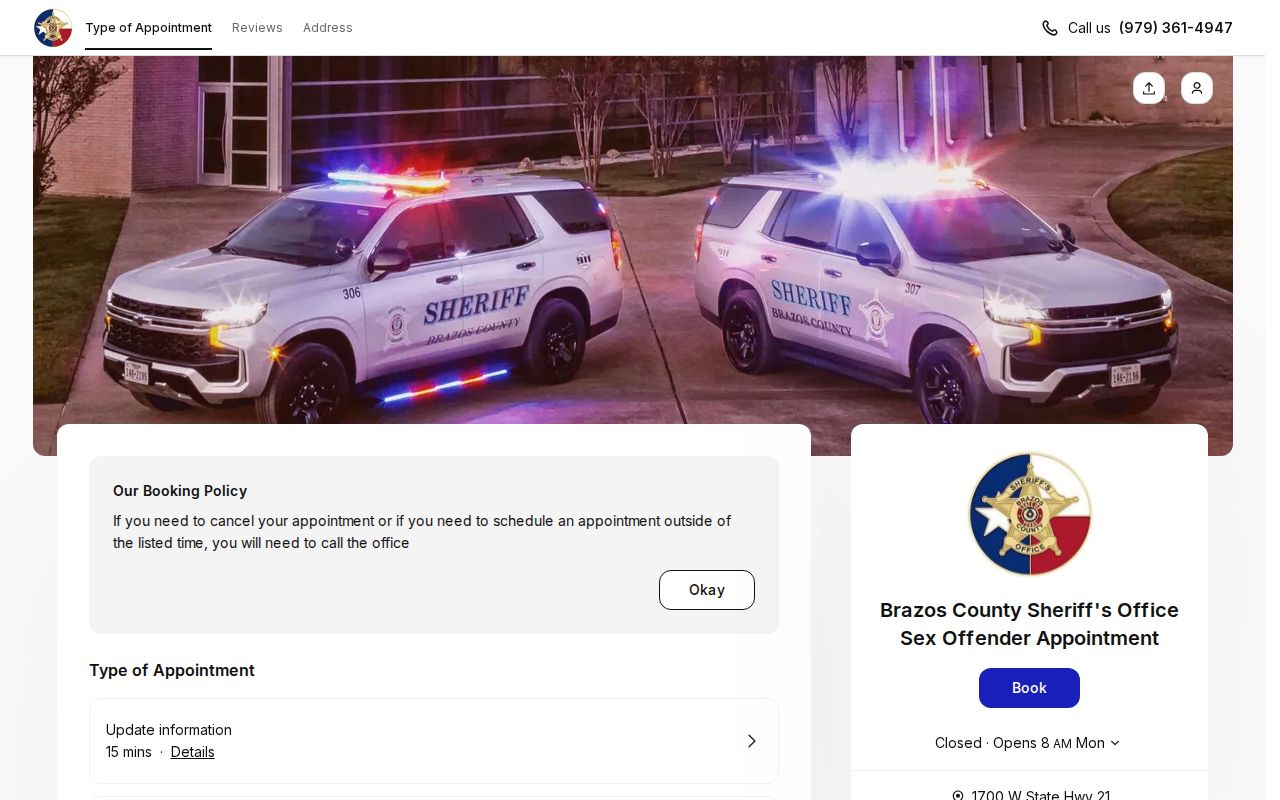
The separate appointment choices help residents direct a question to the correct registration process instead of treating the public search as an intake form.
What a Registry Profile Shows
A Texas public profile combines identity, location, case, and supervision fields. Conditional vehicle information may appear for qualifying trafficking cases. The profile is broader than a simple name list but is intentionally narrower than a full criminal-history file.
| Identity | Name, aliases, date of birth, sex, race, height, weight, eye and hair color, and a current photo. |
|---|---|
| Location | Address or geographic description and, when applicable, a higher-education institution. |
| Case facts | Reportable offense, victim age category, conviction date, and punishment. |
| Status | Supervision status, risk level, registration authority, and verification information. |
| Conditional data | Vehicle details may appear in cases covered by the relevant trafficking provision. |
Article 62.005 excludes Social Security and driver's-license numbers, phone numbers, online identifiers, employer identity or contact details, victim-identifying facts, and other confidential DPS material. A juvenile registration may also be kept nonpublic by court order.
What Texas Keeps Off Public Profiles
The public file is designed for community notification, not unrestricted disclosure of every fact held by government. Protected identifiers are left out to reduce identity theft and victim exposure. That boundary explains why a registry entry cannot replace a court file, a DPS criminal-history review, or a direct verification with the registering agency.
Public-record boundary: Texas Code of Criminal Procedure Chapter 62 defines both the information made public and the details that remain confidential.
If a public profile lacks a detail, the omission is not proof that no government record exists. It may reflect a statutory exclusion, a court order, or a field that does not apply.
Registration Requirements and Levels in Texas
Texas distinguishes risk assessment from the length of the reporting duty. A low, moderate, or high label describes assessed danger; it does not itself decide whether registration lasts ten years or life. Duration instead turns on the reportable offense, age and adjudication path, repeat circumstances, and the statutory start point.
Brazos Verification Schedules
The frequency of verification is separate from risk level and registration duration. Civil commitment calls for verification every 30 days. A person with two or more sexually violent offenses generally verifies every 90 days. Other registrants generally verify annually. The Brazos appointment menu reflects these distinct cycles.
New arrivals, transfers, information changes, annual visits, and transfers out also have different administrative needs. A searcher who sees an old-looking address should not confront the listed person. The safe path is to give the relevant municipal police department or the Brazos County registration unit the facts and let the registering authority determine whether the record is late, pending, or noncompliant.
Texas Registry Program and Duties
The Texas DPS registration program explains the statewide framework that supplies the Brazos County search. Local agencies collect and verify required details, then the state makes the public portion searchable.
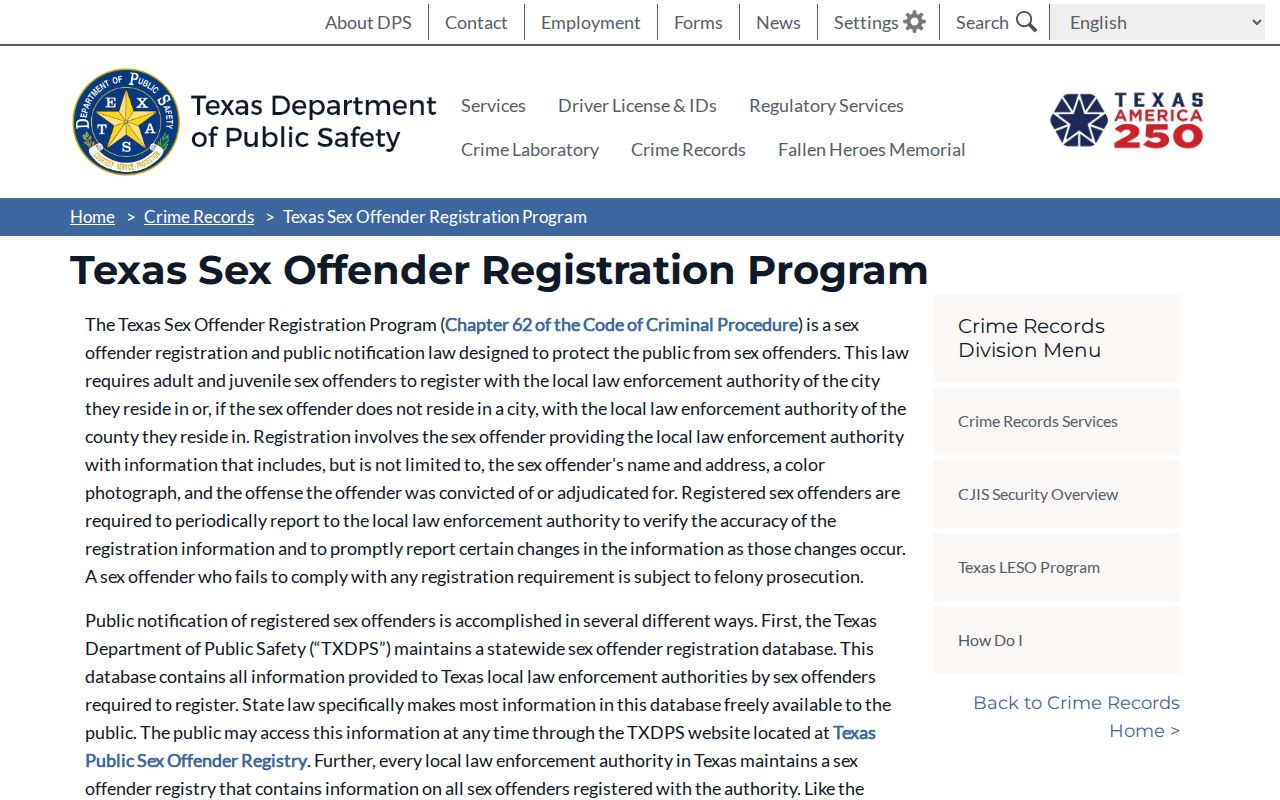
This division of work is why a local compliance question belongs with the registering police or sheriff even though the public profile appears on a DPS system.
The official registry search itself shows the options available to the public.
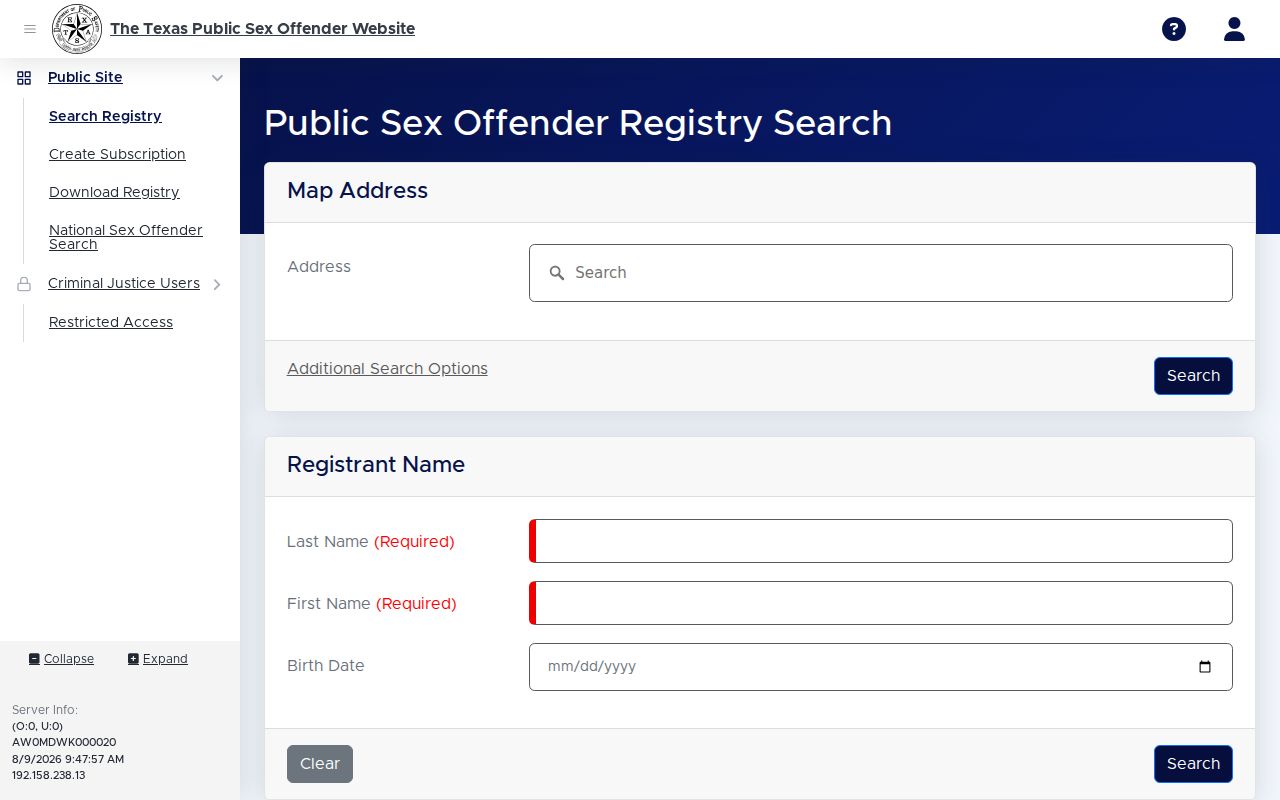
Name and location routes can be used together to confirm whether a likely match fits Brazos County.
Texas Registry Alert Subscriptions
The official Texas registry subscription service provides the alert channel for people who want updates after a one-time Brazos County search.
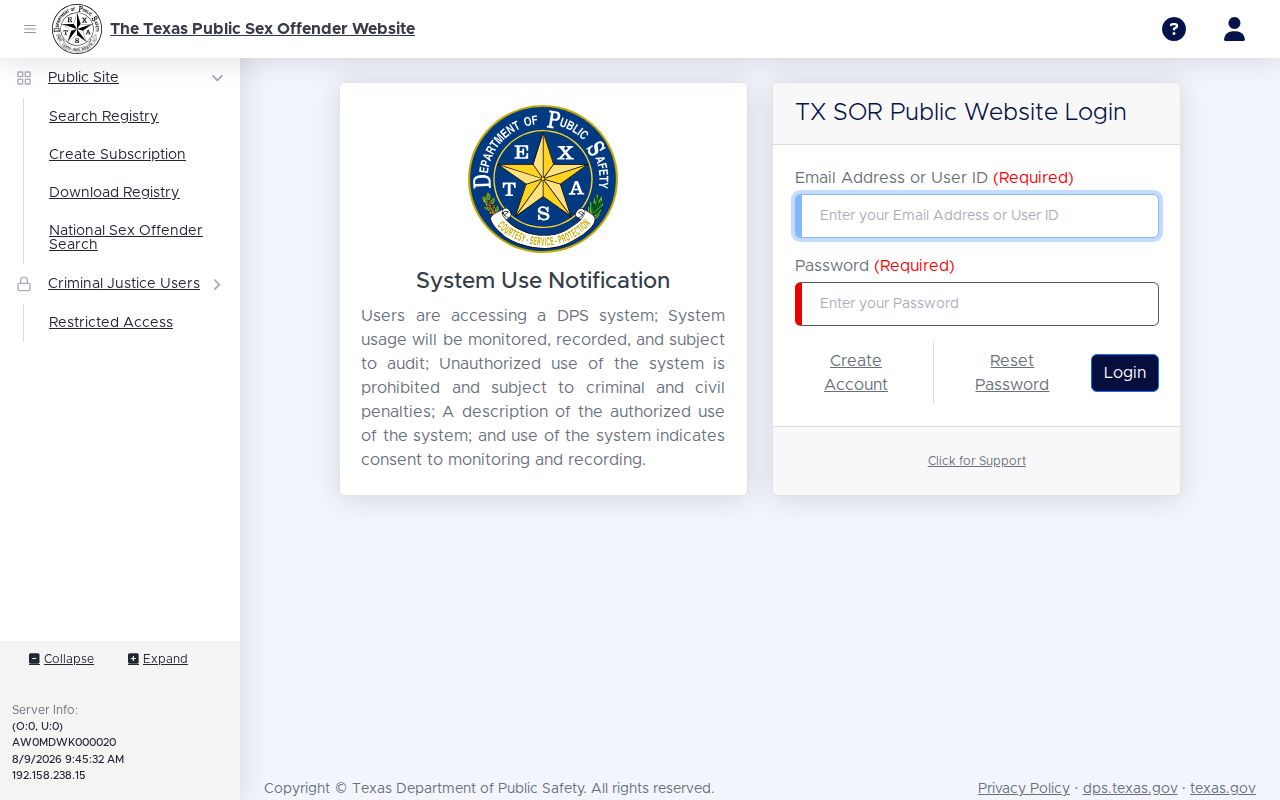
A subscription supplements the live registry. Open the underlying state profile whenever an alert arrives and verify any local question with the registration authority.
DPS, NSOPW, and Brazos Compared
Each official channel answers a different question. DPS is the authoritative statewide public registry and subscription source. The Brazos County Sheriff's Office is a local registration authority for unincorporated residents and handles appointments or compliance reports within its role. The U.S. Department of Justice national search adds participating jurisdictions outside Texas.
A person who moved beyond Brazos County may no longer be easy to find through a county-only location search. In that situation, broaden the search before drawing a conclusion.
National Search Beyond Brazos County
The Dru Sjodin National Sex Offender Public Website is the official federal gateway for a multi-jurisdiction search. It is most useful when a person has crossed state lines, when a location history is uncertain, or when a family is researching more than one state.
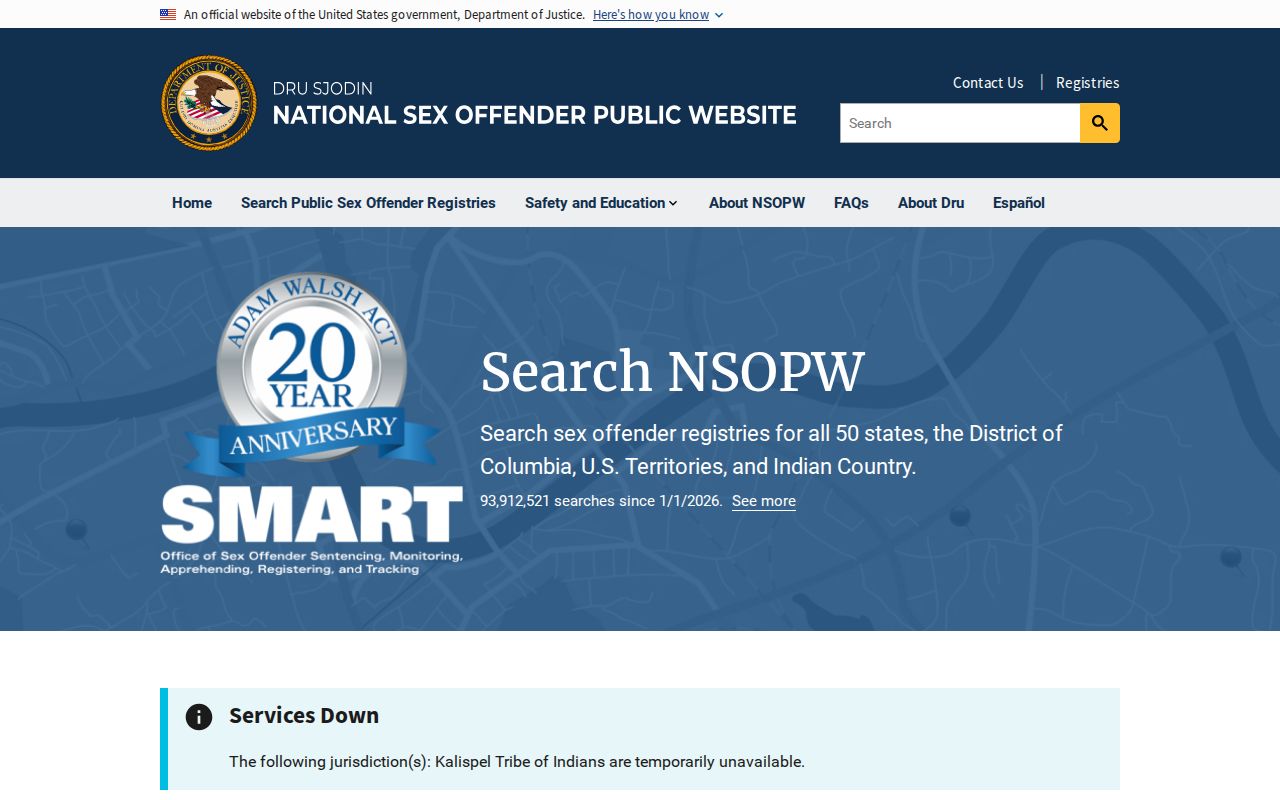
NSOPW gathers results from participating public registries, but the underlying jurisdiction remains responsible for its record. Open the source profile and use that jurisdiction's contact process when a detail needs verification.
Lawful Use and Community Notification
High-risk or civil-commitment moves can produce English and Spanish postcards within one mile in an unsubdivided area or three blocks in a subdivision, along with specified school notices. Texas Chapter 62 does not impose one blanket statewide school or park distance rule. Supervision conditions and local ordinances can still create individual restrictions, so a map point alone does not prove a violation.
Use registry information lawfully. Texas Code of Criminal Procedure Chapter 62 forbids misuse, including conduct that becomes harassment, threats, or other criminal behavior. Never intimidate or target a listed person.
The official Texas registration statute sets the duties, public fields, notices, and confidentiality boundaries discussed above.
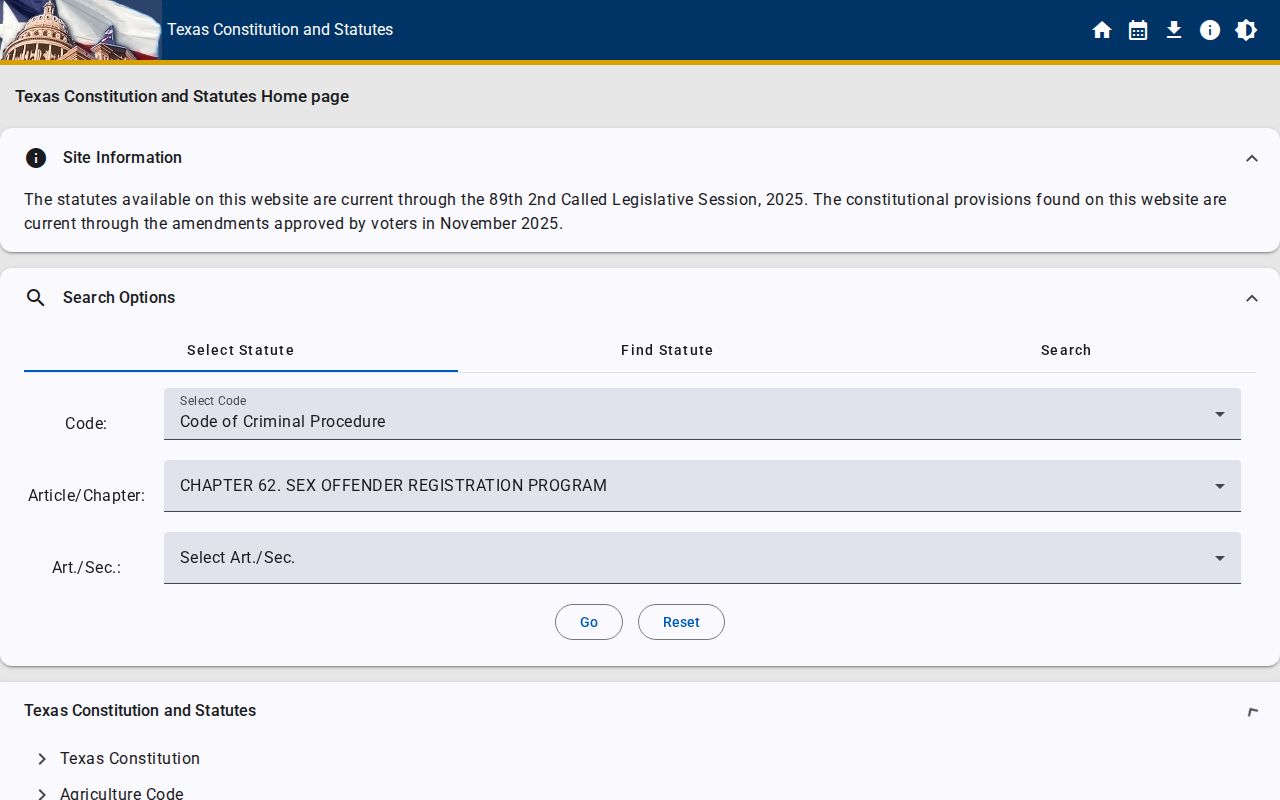
Reading the statute with the public profile helps separate an actual statewide rule from a local ordinance or an individual's supervision condition.
Report suspected noncompliance to the municipal police department responsible for a city address or to the Brazos County Sheriff's registration unit for an unincorporated address. Give the agency the exact profile and observed discrepancy. Emergency conduct still belongs with 911; the registry office is for registration and verification matters.