
How to Check Criminal History in Brazos County
Begin with the official record that fits the event. The Brazos County Tyler portal is the county route for judicial records. The jail side is for current booking and custody information. A police or sheriff incident report stays with the agency that wrote it, and the Texas DPS public name search covers a narrower set of reported conviction and deferred-adjudication history.
Gather a full name, date of birth when lawfully available, spelling variants, an approximate event date, and any case or booking number before starting.
- Search the Brazos judicial portal for a filed county criminal case.
- Check the jail portal when the event is a recent booking or present custody question.
- Identify the arresting agency before seeking an incident narrative.
- Read the disposition and sentence in the clerk's case file rather than inferring guilt from an arrest.
- Order a certified disposition or use DPS fingerprint personal review when an official own-record check requires it.
Justice Web, DPS, or Jail Portal
The three main systems are not duplicates. A recent booking can appear before prosecutors file a case. A county dismissal may be clear in the clerk's docket while a delayed or unmatched disposition leaves the state repository incomplete. The DPS public search also excludes many nonconviction records that an eligible subject can see through fingerprint review.
Official Texas Background Checks
The Texas Department of Public Safety Crime Records Division operates the Computerized Criminal History repository. A member of the public may create an account for the DPS Criminal History Conviction Name Search. DPS describes the public product as reported Class B misdemeanor or more serious arrests that ended in conviction or deferred adjudication. One search credit was listed at $1 on the research date; confirm the purchase screen before paying.
For a person's own identity-linked Texas record, DPS Form CR-63 directs the personal-review process through Fingerprint Applicant Services of Texas. FAST is operated by IDEMIA through IdentoGO. A fingerprint check avoids the core weakness of a name-only match, especially when names and birth dates are shared.
When Fingerprints Beat a Name Search
A DPS name result can be useful, but it is not the best way to diagnose an error in one's own repository record. Full birth date narrows the name search and the system expands combinations automatically, yet identity still rests on typed biographical facts. Fingerprint personal review ties the request to the state identification number and arrest cycles recorded for the subject.
The official DPS fingerprinting page links the FAST and personal-review routes.
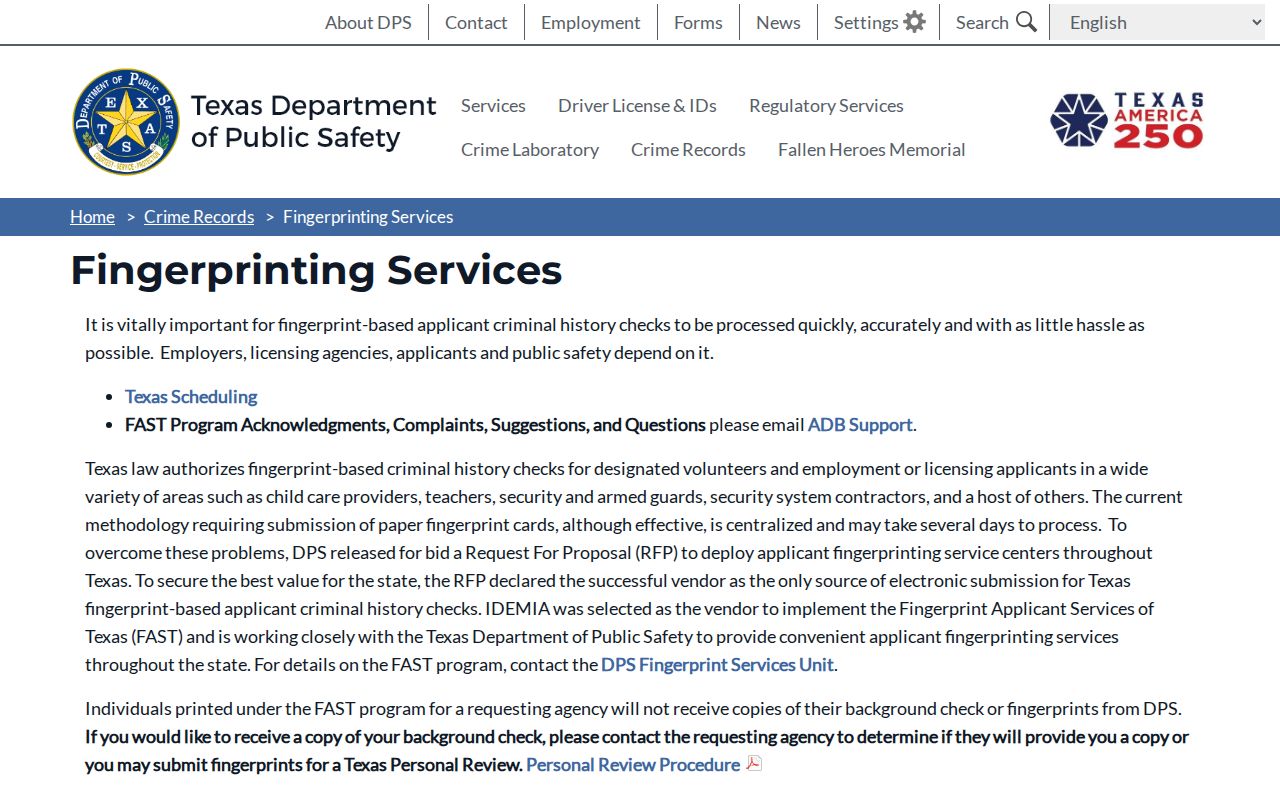
When a Brazos disposition is missing from the state result, obtain the certified local disposition first and follow the DPS correction or review instructions instead of assuming the portal will repair itself.
Types of Criminal Records
Brazos County agencies create records at different moments in the justice process. Keeping the custodians separate prevents a request from landing at an office that never held the desired document.
- Incident and arrest reports come from the sheriff, city police, campus police, trooper, or constable that acted.
- Booking records come from the Brazos County Detention Center after intake.
- Court files contain complaints, informations or indictments, docket events, pleas, orders, judgments, and sentences.
- State criminal history links qualifying arrest cycles and reported dispositions inside DPS CCH.
- Warrant, supervision, and registry records follow separate court, CSCD, TDCJ, parole, and Chapter 62 channels.
The official Brazos County court directory identifies the local courts.
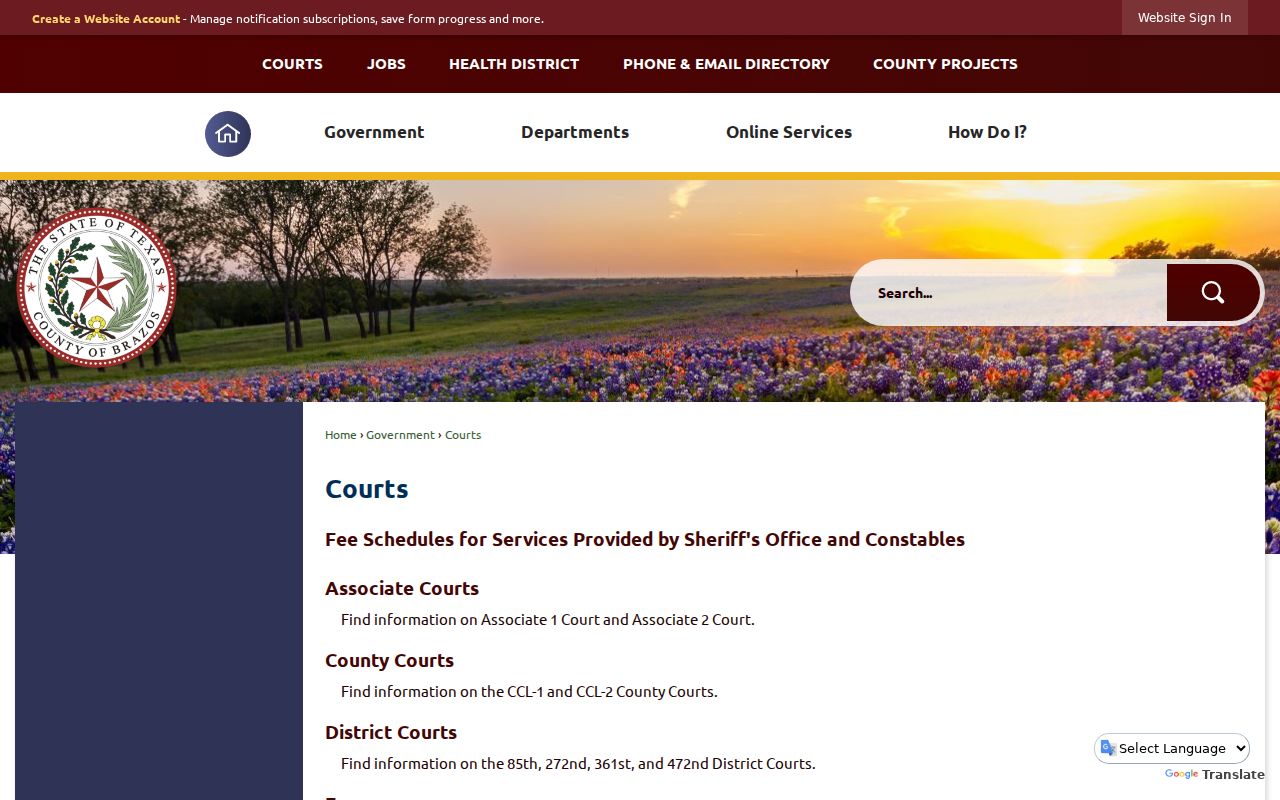
That court map is the bridge from a charge label to the clerk and court that can supply its filed outcome.
Why the District Clerk Holds Misdemeanors
Texas Government Code section 25.0232 makes the Brazos County District Clerk clerk for both the District Courts and County Courts at Law. That local rule matters because it puts ordinary Class A and B misdemeanor files beside felony files at the same clerk, rather than sending the misdemeanor case to the County Clerk.
The 85th, 272nd, 361st, and 472nd District Courts hear felonies. County Courts at Law Nos. 1 and 2 hear ordinary Class A and B misdemeanors. A district court may keep a misdemeanor connected to a felony defendant, so a court's name alone does not prove the final offense grade. Municipal and justice courts handle fine-only Class C matters through their own systems.
Local rule: the Brazos District Clerk is the criminal-file custodian for both felony and Class A or B misdemeanor cases. Ask the County Clerk about its noncriminal scope instead.
What a Brazos County Criminal Record Shows
The content changes with the source. A booking sheet emphasizes intake and custody, while a court file shows prosecution and outcome. A DPS criminal-history entry links reported arrests to the disposition chain.
| Name & identifiers | Names, aliases, birth details, agency identifiers, and identity numbers where public or authorized. |
|---|---|
| Arrest and booking | Arresting agency, event date, booked charge, fingerprint/photo intake, and custody status. |
| Charges and statutes | Complaint, information, or indictment counts with offense and statute references. |
| Disposition | Dismissal, acquittal, conviction, deferred adjudication, or another court result. |
| Sentence | Jail or prison term, fine, community supervision, credit, and court orders where applicable. |
| Custody or supervision | County jail, TDCJ custody, probation, parole, or completed status, depending on the system. |
Disposed does not always mean convicted. Open the judgment or final order when the exact result matters.
From Bryan Booking to DPS
An arresting agency first creates the probable-cause or offense narrative. When a person is booked for a Class B misdemeanor or more serious allegation, intake personnel fingerprint and photograph the person, inventory property, perform screening, and link the arrest to a state identification number and tracking number. The event then enters the reporting chain to DPS.
Prosecutors and clerks build a separate case through a complaint, information or indictment. Courts later report dispositions back through the criminal-history chain. A missing tracking number, reporting lag, or failed match can leave DPS incomplete even when the Brazos file is correct. That is why an arrest, booking, filed case, and repository entry should never be treated as four copies of one document.
The county jail sequence and custody limits are explained more fully in the Brazos County arrest history resource.
Public Access Laws
The Texas Public Information Act gives access to existing government records but does not require an agency to create a new analysis or answer questions. Other statutes control criminal-history dissemination, expunction, nondisclosure, juvenile confidentiality, and registry publication.
Key statutes:
Government Code Chapter 552 sets the Texas Public Information Act process and exceptions.
Government Code Chapter 411 governs criminal-history dissemination and orders of nondisclosure.
Code of Criminal Procedure Chapter 55A governs Texas expunction.
Code of Criminal Procedure Chapter 62 controls sex-offender registration and public fields.
Law-enforcement information may contain withheld material involving active cases, victims, juveniles, protected identifiers, or safety. Request the record from the office that created it and describe existing documents, dates, and identifiers as precisely as possible.
Brazos Record Fees and Counters
The District Clerk is at 300 East 26th Street, Suite 1200, in Bryan. The courthouse is open weekdays from 8 a.m. to 5 p.m., but the clerk's public counter closes at 4:30 p.m. The building offers visitor Wi-Fi on every floor, which can help a visitor review electronic docket details before ordering copies.
| District Clerk search | $5 per name or record search. |
|---|---|
| Ordinary paper copy | $1 per page. |
| Certification | $5 certification charge in addition to copies. |
| Jail incarceration date | $5 for the county's date-of-incarceration product. |
| Mugshot copy | $5; a full jail file is subpoena-only and priced separately. |
Fees and procedures can change, so confirm them with the office before submitting payment. The county hours and location page documents courthouse access.
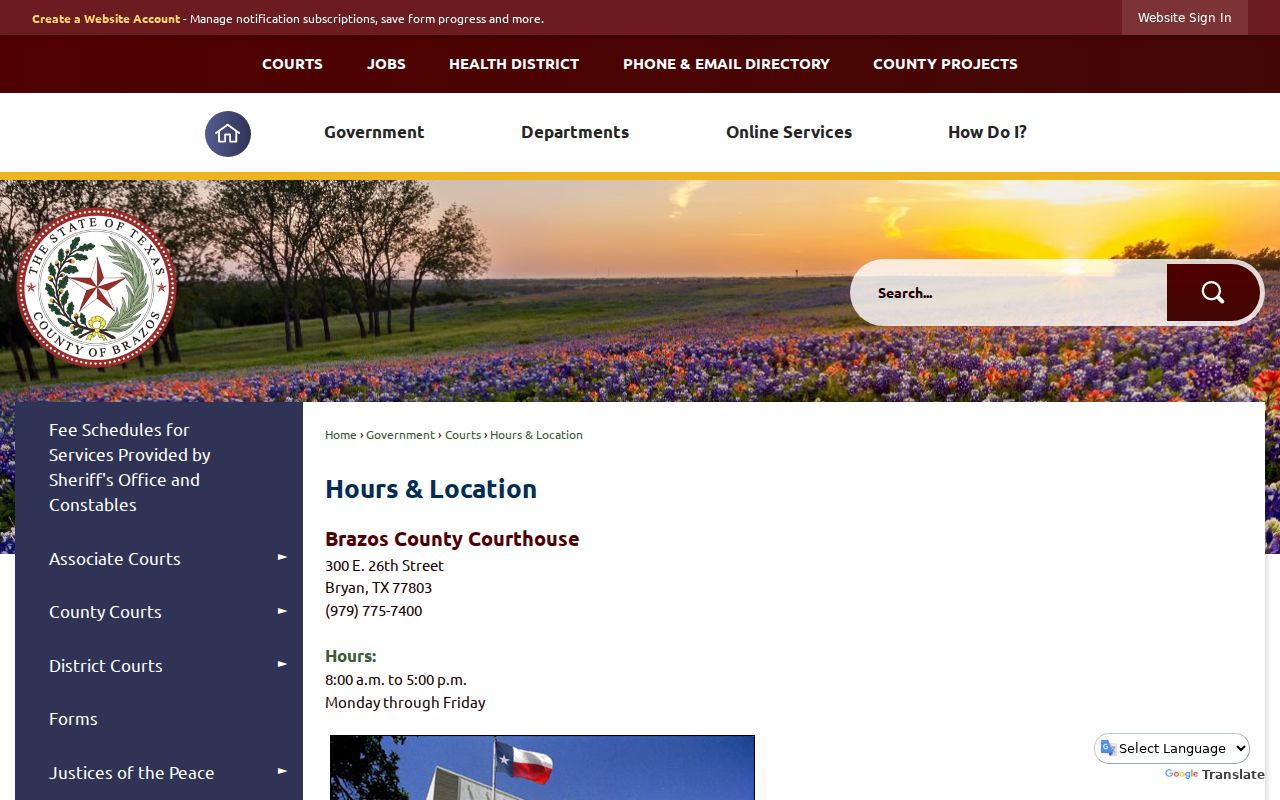
The difference between the building's closing time and the clerk counter deadline is important for same-day requests.
Sealed, Expunged, and Restricted Records
Texas uses expunction under Code of Criminal Procedure Chapter 55A to destroy or return qualifying records. An order of nondisclosure under Government Code Chapter 411, Subchapter E-1 is a different mechanism that limits public disclosure but does not erase every government record. Eligibility depends on the case and statute; dismissal by itself does not automatically remove the booking, court docket, or DPS cycle.
Juvenile records, victim identifiers, active-investigation material, and protected personal identifiers have separate access limits. A record that vanishes from a public portal may be sealed, restricted, moved, or unavailable because of system coverage. For one's own case, compare the court order with a DPS fingerprint personal review and use the official correction route when a repository entry remains incomplete.
The District Clerk accepts expunction-related filings and can provide the certified orders or dispositions held in the court file, but the office does not decide eligibility or act as legal counsel. A person checking the result should allow for separate updates by the clerk, arresting agency, jail, and DPS. One public search changing before another is not proof that the order failed. The exact order and the identity-linked state review are stronger evidence than a casual name search.
Current Jail, State, or Federal Custody
Custody searches must follow the facility level. The Brazos County Detention Center at 1835 Sandy Point Road in Bryan holds county detainees and answers its 24-hour line at (979) 361-4800. Its jail portal is a current booking and custody tool, not a full arrest archive. When the portal loops or fails, call the facility or use Brazos County JustFOIA.
People sentenced to state custody belong in the Texas Department of Criminal Justice Online Inmate Search. Federal custody uses the Bureau of Prisons locator. A federal criminal case from Brazos County falls in the Southern District of Texas and its public docket may be available through PACER.
The official PACER service supplies federal docket access.
PACER does not replace the Brazos clerk portal, county jail search, TDCJ locator, or BOP locator; each covers a different custody or court system.
When Statewide Court Search Falls Short
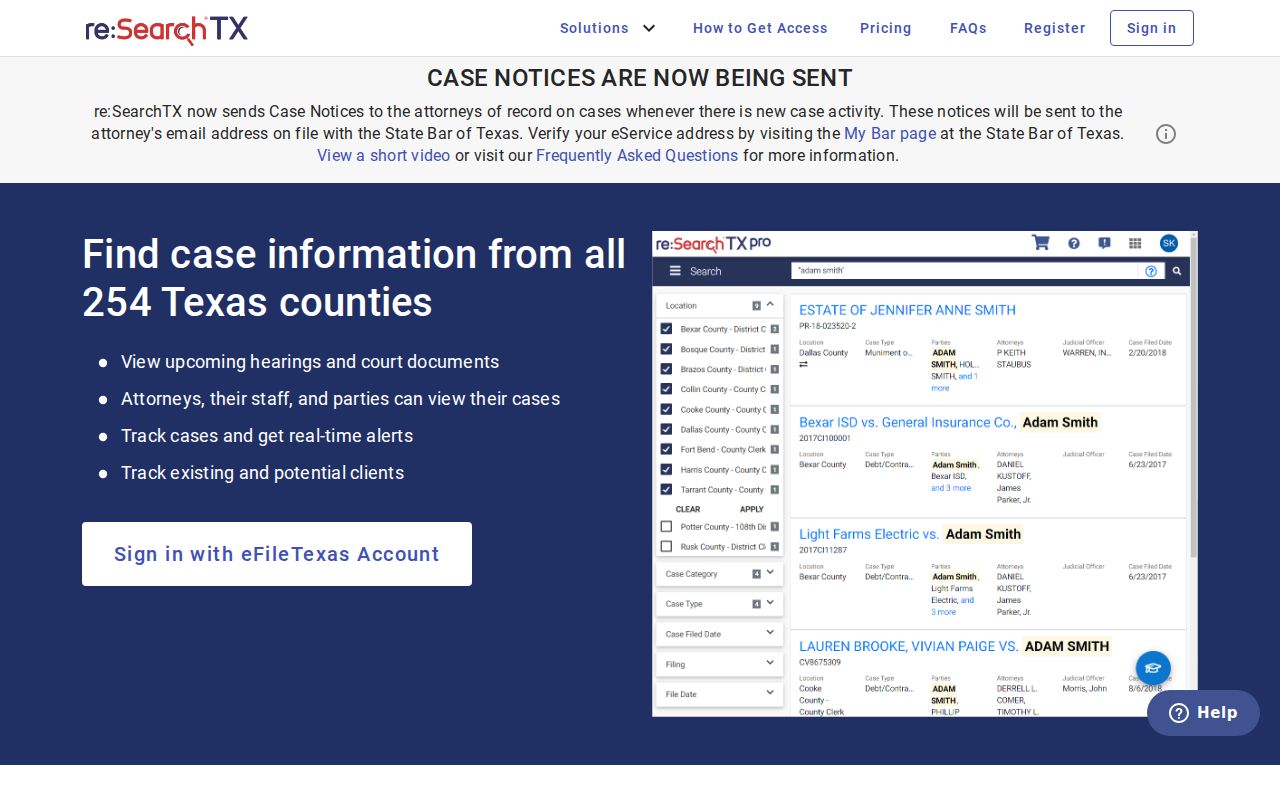
Texas has no complete statewide public trial-level criminal case search. re:SearchTX is a large e-file-derived document system, but the Texas Judicial Council reports that its collection dating from 2016 excludes criminal case records. A Brazos criminal-case search therefore depends on the county Tyler portal and District Clerk rather than a statewide promise.
The official re:SearchTX page is still useful for understanding the statewide court-document channel.
For Brazos felonies and Class A or B misdemeanors, use the county portal, then request copies or certification from the District Clerk. The full local case-file process is detailed in the Brazos County criminal court case records page.
Criminal Records by City in Brazos County
The county's three largest incorporated places are College Station, Bryan, and Kurten. City police write their own incident reports, and municipal courts keep their Class C files. College Station and Bryan have full local departments and courts; Kurten relies on the Brazos County Sheriff and justice courts. Population figures are the official July 1, 2024 incorporated-place estimates.
College Station Criminal History
128,023 residents. CSPD records, municipal citations, warrants, and county jail routing.
Bryan Criminal History
91,541 residents. Bryan Police records services and Municipal Court of Record.
Kurten Criminal History
406 residents. Sheriff, county portal, detention center, and JP fallbacks.
Inside the Brazos Records Hub
Brazos County moved its seat from Boonville to Bryan in 1866. The modern records hub centers on the courthouse and nearby justice offices, while detention sits west of central Bryan. The county's urban pair, Texas A&M campus, and rural fringe create a layered agency map: sheriff, Bryan Police, College Station Police, university police, DPS troopers, constables, and campus departments may all create the first report.
The official Brazos County home page is the starting directory for county departments.
Identify the arresting or issuing agency before filing a request. A Bryan Police narrative, a detention intake file, and a District Clerk judgment belong to different custodians even when they describe the same event.
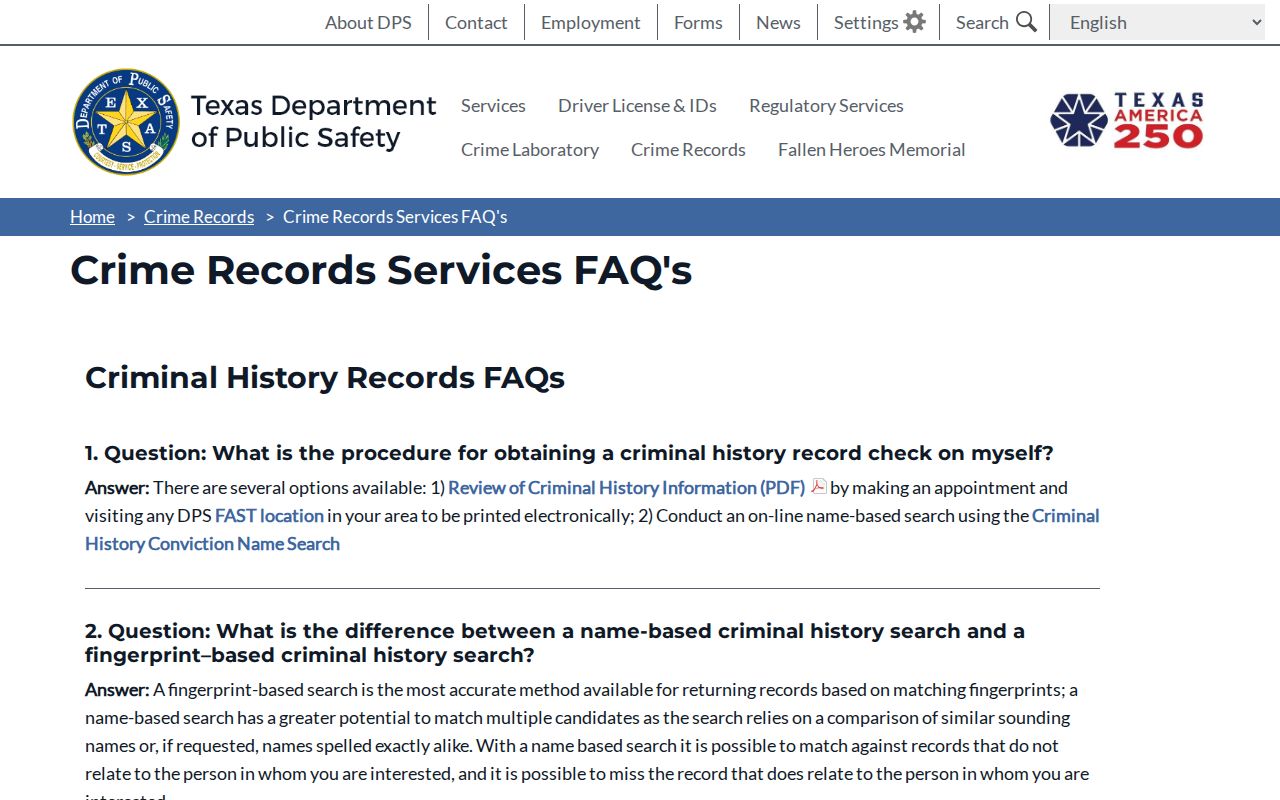
The DPS crime-records FAQ explains the state repository's public and personal-review products.
Together, the county and state sources show why no single search can stand in for a full, verified record trail.